
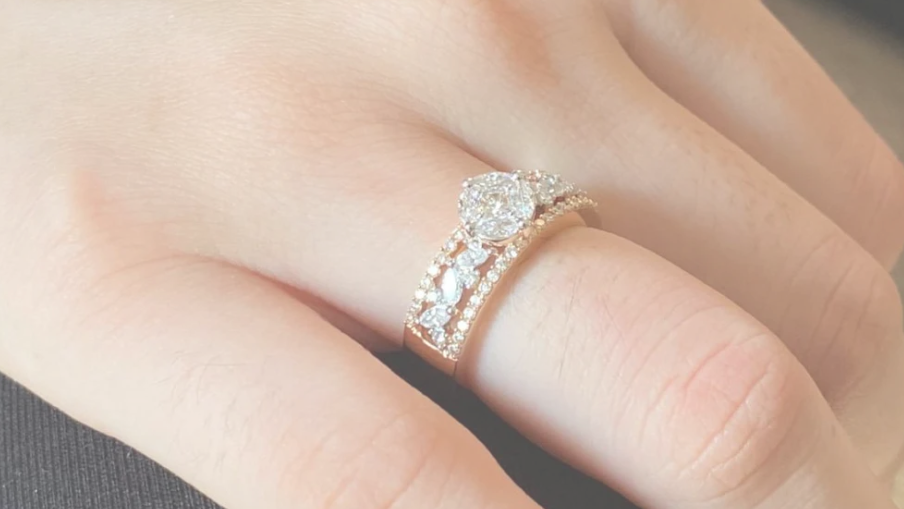
There is a quiet moment that often surprises first-time jewelry sellers. It happens when two diamond rings—nearly identical at first glance—receive remarkably different offers once they enter the resale market. To many owners, the distinction feels confusing, even personal. After all, beauty appears equal. The brilliance seems comparable. The emotional significance may even be greater in one ring than the other.
Yet within the world of fine jewelry transactions, appearance alone rarely determines value.
Behind every appraisal lies a far more nuanced conversation involving craftsmanship, proportion, market psychology, rarity, and the invisible language experienced buyers understand instinctively. In the secondary diamond market, value is not created by sparkle alone. It is shaped by details that often remain unnoticed until a ring is examined through a more informed lens.
This is what makes diamond resale both fascinating and deeply misunderstood.
The Difference Between Visual Beauty and Market Desirability
Luxury objects have always existed in two worlds simultaneously: the emotional world and the market world. A diamond ring may symbolize commitment, memory, family history, or personal achievement. But when it enters the resale market, another system of evaluation quietly takes over.
Buyers are not simply observing whether a ring is beautiful. They are evaluating how desirable that ring will remain over time.
Two rings with similar visual presence can differ dramatically in terms of cut precision, fluorescence behavior, structural wear, symmetry, setting craftsmanship, and long-term liquidity. Even subtle differences in proportion can influence how professionals perceive brilliance under controlled lighting conditions.
In many cases, the market responds more strongly to balance than size. A perfectly proportioned stone with elegant architecture may attract stronger offers than a larger stone with inconsistencies invisible to untrained eyes.
This distinction becomes especially important in contemporary luxury resale, where buyers are increasingly selective and informed. The secondary jewelry market no longer rewards appearance alone. It rewards confidence in authenticity, durability, and future desirability.
Why Craftsmanship Quietly Shapes Value
One of the most overlooked aspects of diamond resale is craftsmanship.
A ring is never just a diamond. It is a complete object—an interaction between stone, setting, metalwork, design era, and construction quality. Experienced evaluators pay close attention to how these elements coexist.
The setting itself can dramatically influence market perception. Hand-finished prongs, balanced proportions, refined gallery work, and precise stone alignment often signal a level of craftsmanship associated with stronger long-term value retention. Conversely, poorly executed modifications or mass-produced settings may weaken resale confidence even when the center stone appears impressive.
Luxury buyers understand that craftsmanship leaves traces over time. A thoughtfully constructed ring ages differently. It maintains structural integrity more gracefully. It reflects a higher standard of jewelry making that becomes increasingly visible during professional evaluation.
This is one reason knowledgeable sellers often seek specialists who understand both diamonds and jewelry design history when preparing to sell diamond ring at fair value. Informed evaluation depends not only on grading the stone itself, but on interpreting the ring as a complete luxury object.
That distinction can significantly influence the final offer.
The Influence of Market Timing and Buyer Psychology
Resale value is also shaped by something less tangible: market psychology.
Trends within the luxury jewelry sector evolve quietly but consistently. Certain cuts, settings, and design periods move in and out of demand depending on broader cultural preferences. Oval cuts may rise in popularity during one period, while classic emerald cuts regain attention in another. Vintage-inspired settings may suddenly command stronger interest as buyers gravitate toward timeless aesthetics.
The resale market reacts to these shifts more quickly than many sellers realize.
At the same time, buyer confidence plays an equally important role. Rings accompanied by strong documentation, transparent history, and professional presentation often receive more favorable consideration because they reduce uncertainty. Luxury transactions are deeply connected to trust. Buyers are not merely purchasing materials—they are purchasing reassurance.
This explains why two visually similar rings can enter the market under entirely different conditions. One may inspire immediate confidence through clarity of provenance and quality consistency. Another may create hesitation despite appearing comparable on the surface.
The difference between the two is often psychological before it becomes financial.
Why Expertise Matters More in the Modern Resale Market
As the luxury resale sector becomes increasingly sophisticated, the importance of informed evaluation continues to grow.
Today’s market is influenced not only by local demand but by global pricing structures, collector behavior, digital transparency, and evolving luxury consumption patterns. Sellers are entering a marketplace where information moves quickly and expectations have become more refined.
This has changed the role of professional buyers entirely.
The strongest evaluations no longer rely solely on standardized grading reports. They involve interpretation. They require an understanding of how craftsmanship, condition, rarity, and market sentiment intersect in real time. Experienced evaluators recognize nuances that automated systems or inexperienced buyers may overlook entirely.
For sellers, this creates an important shift in perspective. The goal is not simply to obtain an offer. The goal is to understand why a ring carries the value it does within the current market environment.
That understanding transforms the experience from a transaction into a process of informed decision-making.
Conclusion
In the world of fine jewelry resale, similarity in appearance rarely guarantees similarity in value. Two diamond rings may share brilliance, elegance, and visual charm while occupying entirely different positions within the secondary market.
The reasons are often subtle.
Craftsmanship, structure, buyer confidence, design relevance, market timing, and professional interpretation all contribute to the outcome of a resale evaluation. What appears equal on the surface may reveal meaningful differences once examined through the perspective of experience.
This is precisely why the modern luxury resale market rewards transparency and expertise more than ever before. Sellers are no longer navigating a world defined only by carat weight or certificates. They are entering a landscape shaped by nuance, trust, and informed market understanding.
And within that landscape, the true value of a diamond ring is rarely determined by beauty alone.


Leave a Reply