
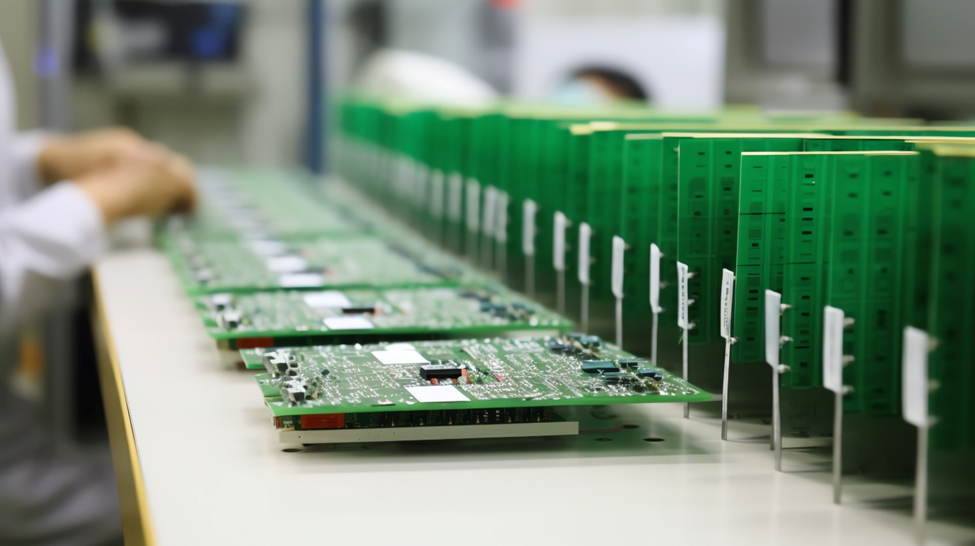
A business collaboration with a professional Printed Circuit Board or PCB assembly manufacturer can help to lower the cost of production, maintain high standards in product quality, and shorten time to market. Delegating PCB assembly to a third party allows businesses to concentrate on what they do best: design and marketing. And with experience in engineering and superior manufacturing technology, the third party can perform the task more efficiently.
It takes time, money, and accuracy to create an electronic product. An in-house production process consumes valuable time and resources in many electronics companies, and can stall product development. However, the construction of an in-house assembly line demands the investment of a significant amount of expensive machinery, recruitment of specialized engineers and complex supply chains.
Printed Circuit Boards (PCBs) are the heart of the electronic world. They link critical elements of appliances and consumer electronics in smart homes to complex industrial medical systems. With technology becoming smaller and boards increasingly complex, the assembly of these electronic building blocks requires very specialized machines and control environment. Without the appropriate infrastructure, it is easy to see why this is not attempted without frequent defect rates and embarrassing product recalls.
By outsourcing this crucial production stage to a specialized PCB assembly manufacturer, companies gain a significant strategic edge. Organizations can avoid the hassle of sourcing and quality control issues by partnering with specialized providers to scale operations efficiently. In this detailed overview, we’ll delve into the essence of collaborating with a professional PCB assembly manufacturer and how such a partnership directly contributes to business expansion.
What are the most important advantages when it comes to PCB assembly manufacturing?
When you collaborate with a knowledgeable and skilled EMS partner, your company can operate in a different way. Now, let’s go through the first few advantages that your organization will gain through outsourcing your circuit board production.
What are the methods PCB assembly manufacturers use to lower the cost?
Establishment of an in-house manufacture of the PCB is very costly. It is necessary to buy pick and place machines, reflow soldering ovens, and automated optical inspection (AOI) equipment. Moreover, you’ll need to fund them for ongoing maintenance, and employ trained experts to run them.
These are the big capital costs that a professional PCB assembly manufacturer absorbs. These manufacturing partners make boards for multiple customers and thus enjoy economies of scale. They buy electronic components in bulk, which means that they pay less from a component distributor than would just one business. Outsourcing allows you to only pay for the number of boards that you need, instead of paying for a fixed number of manufacturing. If you’re looking to reduce your in-house overheads and supply chain management costs, select a turnkey PCB assembly manufacturer.
What are the reasons for the superior product quality of professional PCB assembly?
To ensure high-quality manufacturing, the industry’s standards must be followed, including ISO 9001 and IPC-A-610. These are quality control standards that professional PCB assembly manufacturers rely on to create their business models. They have dedicated quality assurance teams utilizing cutting edge testing techniques in the production process.
Some of the testing methods include Automated Optical Inspection (AOI), used to identify surface defects in the soldering process, In-Circuit Testing (ICT), which checks the electrical performance of the components, and X-ray inspection, which is used for complex parts like Ball Grid Array (BGA). This enterprise-grade testing equipment is directly applied to the products from a specialized manufacturer. This strict quality management allows for less product to be sent to your clients that may have some of these defects, which in turn will benefit the reputation of your brand while also cutting down on warranties and warranty claims.
What benefit does outsourcing a PCB assembly bring in terms of a shorter time-to-market?
The electronics industry is a competitive business with speed being a key element. Product releases as much as a few months late can lead to loss of market share and revenue. The PCBs assembly industry has highly optimized production lines with the purpose of getting the highest number of assemblies produced. They already have the relationships with suppliers of hard-to-find parts that they need to obtain them quickly, without the delays in the supply chain that can slow down their internal production teams.
Rapid prototyping is also available from many of the professional assembly partners. With this you can test new designs on circuit boards, find their weaknesses and reiterate rapidly. When prototype is refined, the manufacturer can easily move the project into high-volume production. This streamlined procedure can substantially minimize the timeframe of it taking a product from the start of design to end customer.
Make the best of your electronics production strategy today
Outsourcing circuit board production is a significant change in your operation that offers great long-term benefits. Your company can benefit from advanced manufacturing technologies, engineering expertise, and streamlined supply chains right from the start by working with an experienced PCB assembly manufacturer. This is a great way to allow your internal teams to concentrate on product development, software coding, and market growth.
The next step is to research the manufacturing partners to see what industry certifications, testing, and minimum orders they have. Having a prototype run with a specific PCB assembly company is a great approach to assess their interaction capacities and manufacturing standards prior to going into a big manufacturing agreement.
Frequently asked questions
What is the price of PCB assembly production?
The price for PCB assembly is affected by the complexity of the board design, the quantity of SMT components, the order quantity and the turn around time. The number of products being ordered, the more that is being ordered the less expensive it is going to be per individual product. If the manufacturer purchases all the components, the services are known as turnkey and will be priced higher in the beginning but may result in less cost incurred in-house and shipping.
How long does it take to make the PCB assembly?
Normally, the PCB assembly period for high volume is 2-4 weeks, depending on the availability of the components and the manufacturer’s existing capacity. But, for quick engineering tests, many PCB assembly firms provide expedited quick turn prototyping capabilities which can provide completely assembled boards within 24 to 48 hours.
How to select a PCB assembly manufacturer?
As a request to the PCB assembly manufacturers, you should check the quality certifications like ISO 9001 and IPC standards, and enquire about the testing equipment, such as AOI and X-ray inspection. Also, check their capabilities in sourcing components, the minimum order quantities and their experience in manufacturing electronics for your industry. Select a partner that can produce at a level that fits your future scaling plans.
A fine PCBA you can select is Optima Technology.


Leave a Reply