
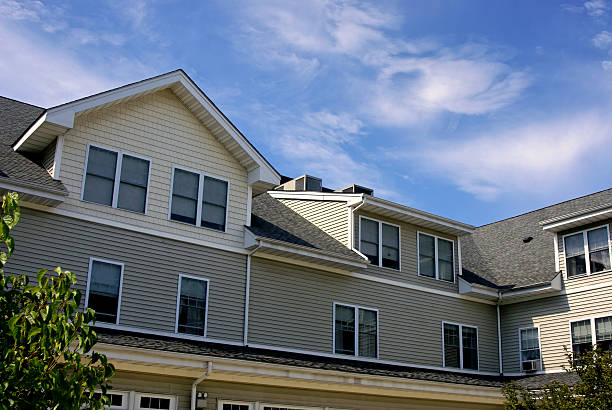
A commercial roof failure in Needham carries consequences that extend well beyond the repair cost. Water infiltration into occupied office space forces tenant relocations and interrupts business operations. Moisture damage to inventory, equipment, or building contents creates liability exposure that can exceed the cost of the roofing project that would have prevented it. And the reputational effect on a property — visible staining, temporary repairs that never become permanent ones, a roofline that communicates neglect to anyone who looks — has measurable consequences for lease renewals, occupancy rates, and the property’s competitive position in Needham’s active commercial real estate market. The roof is the building’s first line of defense, and treating it as a capital investment that deserves careful planning and qualified execution rather than a maintenance item to be deferred and minimized is the perspective that consistently produces better long-term outcomes for Needham property owners.
What Sets Commercial Roofing Apart From Residential Work in Needham
Professional commercial roofing Needham MA requires a set of technical competencies, project management capabilities, and insurance qualifications that distinguish it meaningfully from residential roofing — not just in scale but in kind. Commercial roof systems — TPO, EPDM, modified bitumen, metal panel, and their variants — are installed using methods, tools, and quality control procedures that differ substantially from asphalt shingle installation, and the contractors who do this work well have invested in the training, equipment, and certifications that competent commercial work requires. The code compliance landscape is also distinct: Massachusetts commercial building code requirements for roof insulation, drainage, wind uplift resistance, and fire ratings impose specifications that are not relevant to residential work and that contractors without commercial experience may not be familiar with.
The occupied building management dimension adds a further layer of complexity that separates commercial roofing from residential. A residential roofing project displaces a family for a day. A commercial roofing project on an occupied office building, retail center, or multi-family property requires coordinated communication with tenants, carefully managed access to rooftop mechanical equipment, noise and odor control during business hours, weather protection for interior areas adjacent to the work zone, and a sequencing plan that maintains the building’s weather-tightness throughout a project that may span multiple weeks. Contractors with genuine commercial experience manage these requirements as a routine part of their project management — those without it discover the requirements on your project.
Energy Code Compliance and Its Impact on Needham Commercial Roofing Projects
Massachusetts has progressively tightened its commercial energy code requirements for roof assemblies, and Needham commercial roofing projects that trigger permit requirements — which includes most significant replacement and repair scopes — must demonstrate compliance with the applicable insulation R-value minimums. The current Massachusetts energy code, derived from ASHRAE 90.1, specifies continuous insulation requirements for commercial roof assemblies that vary by climate zone and occupancy type. Needham’s climate zone classification results in relatively demanding R-value requirements that affect how the roofing assembly must be configured — specifically, the thickness and type of insulation board installed beneath the membrane. A commercial roofing contractor who accounts for these requirements in the proposal design stage produces a specification that passes inspection without modification; one who does not creates a compliance issue that typically requires additional insulation to be added at the property owner’s expense.
The Commercial Roofing Systems That Perform Best in Needham’s Climate
The roofing systems that experienced commercial contractors most commonly specify for Needham commercial properties reflect both the technical performance requirements of the New England climate and the practical considerations of installation, maintenance, and longevity that determine long-term value. The options that consistently appear in well-specified Needham commercial roofing projects include:
- TPO membrane with mechanically fastened or adhered installation — the current market-leading system for flat and low-slope commercial roofs in Greater Boston, offering heat-welded seams that create a continuous waterproofing layer, white reflective surfaces that reduce summer cooling loads, and demonstrated flexibility at the low temperatures that Massachusetts winters produce. TPO’s dominance in the local commercial market reflects a track record of reliable performance that has accumulated over two decades of installations in this climate.
- EPDM with ballasted, adhered, or mechanically fastened installation — the predecessor technology to TPO that remains widely used on Needham commercial roofs due to its proven cold-weather flexibility, its resistance to the ozone and UV exposure that affects rooftop surfaces, and its suitability for roofs with complex geometry where single-ply installation flexibility is particularly valuable.
- Modified bitumen with torch-applied or cold-adhesive installation — multi-layer polymer-modified asphalt systems that provide redundancy through their built-up construction and that have decades of demonstrated performance on New England commercial buildings. The most appropriate choice for certain building types and roof configurations where the system’s redundancy characteristics offer advantages over single-ply alternatives.
- Insulated metal panel systems — for commercial buildings where a long service life and minimal maintenance are the primary selection criteria and where the higher installation cost is justified by the ownership timeline, metal panel systems installed correctly in this climate demonstrate lifespans that make their lifecycle cost competitive with membrane systems despite the higher upfront investment.
- Green roof and vegetative systems — increasingly specified on Needham commercial properties seeking LEED certification or sustainable building credentials, these systems require specialized waterproofing membranes and drainage components designed for the additional loading and moisture management requirements that vegetative installation imposes.
Roof Condition Assessment: The Foundation of Sound Capital Planning
The most cost-effective approach to commercial roof management in Needham begins with a current, accurate condition assessment — a professional evaluation of the existing roofing system’s condition, expected remaining service life, and the specific deficiencies that require attention. A condition assessment performed by a qualified commercial roofing contractor, documented with photographs and a written report, provides the information that allows property owners and asset managers to make informed decisions about repair versus replacement timing, budget for upcoming capital expenditures with reasonable accuracy, and prioritize maintenance activities that extend the roof’s remaining service life. Properties managed without current condition assessments tend to react to roofing problems rather than anticipating them — which consistently produces worse outcomes at higher cost than a proactive approach.
The Commercial Roofing Contractor Selection Process
The selection of a commercial roofing contractor for a Needham project should be approached with the same rigor that any significant capital procurement deserves. The criteria that most reliably predict project quality are commercial-specific experience in the applicable system types, manufacturer certification for the systems being proposed, appropriate insurance coverage including completed operations coverage, and references from commercial projects of comparable scope and occupancy type within the Greater Boston market.
What Manufacturer Certification Actually Means
Manufacturer certification programs — offered by TPO, EPDM, and modified bitumen manufacturers including Carlisle, Firestone, Johns Manville, and others — require contractors to complete system-specific installation training, maintain minimum annual installation volumes, and submit to periodic quality audits. Certification is not simply a credential — it is the prerequisite for activating the enhanced system warranties that manufacturers offer on projects installed by certified contractors. A non-certified contractor may be technically capable of installing the membrane correctly, but cannot activate the extended manufacturer warranty that provides the most comprehensive protection available on a commercial roofing investment. For Needham property owners making a significant capital expenditure on roofing, the availability of an extended manufacturer warranty — covering both materials and labor, for periods of fifteen to twenty-five years depending on the system — is a meaningful benefit worth the contractor selection criteria it requires.
Budgeting for Commercial Roofing in Needham
Accurate budgeting for a commercial roofing project in Needham requires understanding the variables that drive cost — roof area, system type, existing insulation condition, deck type, penetration count and complexity, access constraints, and the scope of any ancillary work including flashing replacement, drain reconfiguration, or parapet repair. The wide range of per-square-foot pricing that commercial roofing estimates span in Greater Boston reflects genuine differences in these variables rather than contractor margin differences, which is why single-source quotes without competitive comparison can produce significantly different numbers than a competitive bid process with a well-defined scope.
Property owners who invest in a written roof condition assessment and a detailed project specification before soliciting bids consistently achieve more accurate and more comparable quotes than those who invite contractors to assess and price the work independently. The specification-based bid process produces apples-to-apples comparisons that allow the selection decision to be made on contractor quality and value rather than on assumptions about what each contractor included in their scope — assumptions that frequently prove incorrect at the change order stage of a project that was awarded on price alone.


Leave a Reply