
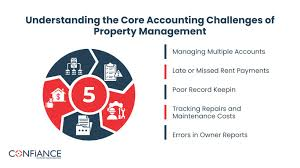
Property management rarely breaks down because of one dramatic failure. More often, performance erodes quietly, late payments pile up, forecasting turns reactive, staff burn time on follow-ups, and financial visibility lags behind reality. Across growing portfolios, these inefficiencies compound into cash flow instability and operational drag.
Manual collection systems keep teams stuck in reaction mode. Industry observations show that many property managers still rely on fragmented tools and spreadsheets, making streamlining rent payments for landlords a constant struggle instead of a structured process. Automation changes the model entirely.
With AI-driven predictions, integrated financial systems, and connected tenant workflows, platforms likextended through RIOO, solve root issues at scale rather than treating symptoms month after month.
Below are five operational challenges automated rent collection directly addresses, and how solving them reshapes portfolio performance.
Challenge 1: Chronic Delinquency Cycles
Late rent often shows early warning signs in tenant behavior and payment history, but manual systems frequently miss these signals, leading to repetitive follow-ups, reminders, and reconciliation work that can consume a large share of operational time.
Property managers and landlords report that rent collection, especially for larger portfolios, is one of the most time-intensive tasks they perform.
That time is not spent on tenant retention,, or portfolio growth, it is consumed by preventable friction. Automation breaks this cycle through predictive and structured workflows:
a) AI Risk Scoring Flags Issues Early
Machine learning models analyze payment history, lease data, and engagement signals to identify at-risk tenants up to 30 days before delinquency. Instead of reacting after a missed payment, teams intervene proactively.
b) Automated Multi-Channel Reminders Increase Collection Rates
SMS, email, and portal notifications deploy on smart schedules based on tenant behavior. This structured cadence significantly improves on-time payments, with automated systems often achieving collection success rates above 90% without manual effort.
c) Dynamic Late Fee Escalation Enforces Policy Consistently
Rather than relying on staff to apply fees case by case, rules trigger automatically. Escalation structures help recover overdue amounts while maintaining policy fairness across the portfolio.
The result is not just faster collections, it is the removal of the repetitive, low-value work that traps teams in reactive loops.
Challenge 2: Cash Flow Forecasting Blind Spots
Portfolio performance depends on timing as much as totals. Yet many property teams still rely on backward-looking reports and static spreadsheets, creating a lag between financial reality and decision-making.
Without predictive visibility, shortfalls appear suddenly, and investment decisions become guesswork.
Automated rent collection systems integrate operational and financial data to create forward-looking insight:
a) 45-Day Predictive Visibility Tied to Lease Events
Upcoming renewals, move-outs, and historical payment patterns feed forecasting models. Managers gain early awareness of potential dips instead of discovering them after revenue drops.
b) Real-Time Pattern Analysis by Property Cluster
Performance trends across buildings, regions, or tenant segments surface quickly. This enables targeted interventions where risk is concentrated rather than blanket policies across the portfolio.
c) Financial Dashboards Auto-Adjust NOI Projections
When collection data updates, income projections adjust instantly. Net operating income becomes a living metric instead of a monthly retrospective figure.
d) Scenario Modeling for Volatility
Seasonal slowdowns, market shifts, or unexpected vacancies can be modeled in advance. This prepares teams with contingency strategies rather than forcing reactive cuts.
With automation, forecasting becomes a continuous process grounded in real-time data rather than periodic estimation.
Challenge 3: Scaling Without Staff Explosion
Growth should improve efficiency, not multiply administrative load. Yet many operators find that doubling units means doubling collections staff because manual processes do not scale.
Automation changes the economics of expansion.
a) Self-Service Portals Reduce Routine Work
Tenants can view balances, make payments, access leases, and submit requests without staff involvement. These portals independently handle the majority of routine interactions.
b) Verified Vendor Waterfalls After Collection
Integrated payment flows ensure vendor disbursements trigger only after funds are confirmed. This removes manual verification steps and reduces reconciliation delays.
c) Enterprise APIs Support Multi-Region Portfolios
As portfolios expand geographically, systems must handle different banking rails, regulations, and reporting structures. API-driven architecture scales across properties without creating data silos.
This allows portfolios to grow from hundreds to thousands of units while collections teams remain lean and focused on exceptions rather than volume.
Challenge 4: Payment Processing Inefficiencies
Even when rent is paid on time, legacy processing introduces friction. Banking floats, weekend delays, and fragmented gateways slow liquidity and blur financial visibility.
Automated collection platforms streamline the entire payment lifecycle:
a) Faster Settlement Methods
Digital rails reduce processing delays, providing quicker access to collected funds and shrinking the gap between payment and availability.
b) Unified Payment Access for Tenants
Simple, consistent interfaces encourage timely payment and reduce errors. One-click experiences increase completion rates compared to multi-step manual systems.
c) Batch Consolidation for Daily Liquidity Insight
Instead of reconciling across multiple accounts, transactions aggregate into clear daily snapshots. Finance teams gain immediate awareness of cash position.
d) Built-In Geographic Compliance
Systems adapt to local payment requirements automatically, preventing errors that cause delays or rejections.
These efficiencies shorten the path from tenant payment to usable capital.
Challenge 5: Dispute and Error Nightmares
Misapplied payments and allocation errors create a hidden drain on revenue and time. Resolving these issues often requires tracing emails, bank statements, and lease records across multiple systems.
Automation addresses this through structured data integrity:
a) Linked Audit Trails
Every transaction connects directly to specific leases and accounts. Managers no longer search across systems to understand payment history.
b) Smart Matching Engines
Automated reconciliation resolves the vast majority of allocation conflicts instantly by matching payment data to lease records.
c) Escalation Filters Reduce Human Intervention
Chatbots and rule engines handle common questions and clarifications, escalating only genuine exceptions to staff.
This dramatically reduces revenue leakage and administrative overhead tied to disputes.
Bonus: The Compounding ROI Effect
Solving each challenge delivers individual gains, but the real impact emerges from their interaction.
Reliable collections improve cash predictability. Predictable cash enables better investment timing. Better timing improves returns. Higher returns strengthen financing profiles. Stronger financing fuels growth. The system becomes a flywheel.
NOI Uplift Through Timing Accuracy
When revenue arrives consistently, reinvestment decisions improve, often driving noticeable increases in net operating income over time.
Improved DSCR and Financing Terms
Lenders favor predictable cash flows. Stable performance metrics can open access to better financing structures.
Portfolio Intelligence for Expansion
Clean, structured data reveals which property types and regions perform best, guiding smarter acquisition strategies.
Automation does not just fix operational pain; it creates strategic leverage.
Why the Right Platform Matters?
Technology alone is not the differentiator; integration is. A purpose-built property management layer built on a unified ERP foundation connects leasing, maintenance, financials, and collections in one environment. This eliminates fragmented workflows and ensures that operational events immediately inform financial outcomes.
That is where solutions focused on streamlining rent payments for landlords become central, not as a standalone tool, but as part of an integrated operational and financial ecosystem that supports the entire property lifecycle.
Conclusion
Manual rent collection keeps property teams locked in cycles of chasing, reconciling, and reacting. Automation replaces that instability with predictive insight, structured workflows, and financial clarity.
By addressing delinquency, forecasting gaps, scaling limits, processing delays, and dispute risks, integrated platforms built on NetSuite with RIOO capabilities turn fragmented operations into coordinated systems. The outcome is not just efficiency, it is predictable performance, stronger financing profiles, and a data foundation for confident growth.
Property managers who adopt these systems move beyond solving today’s problems. They position their portfolios for sustained operational control in an increasingly data-driven property landscape.


Leave a Reply